Artist Statement
My central medium is painting, though my practice extends to barbed wire, steel, and wood sculpture, and short experimental film. Each medium serves a distinct purpose for me: painting registers land and its histories through color, surface, and form. In sculpture I work with found and reclaimed materials that carry their own physical memory, significantly, barbed wire removed by my hand from public lands. Film blurs time and blends documentary observation with poetic registers that painting cannot reach. I begin with site research: walking the land, reading histories, consulting with land managers and thinkers, ecologists, and community members. I then develop paintings on canvas, medium to large-scale, using acrylic, oil, and mixed media; sculptures assembled from reclaimed wire, metal and wood; and short nonfiction experimental films shot on location. The work is labor-intensive and slow by design.
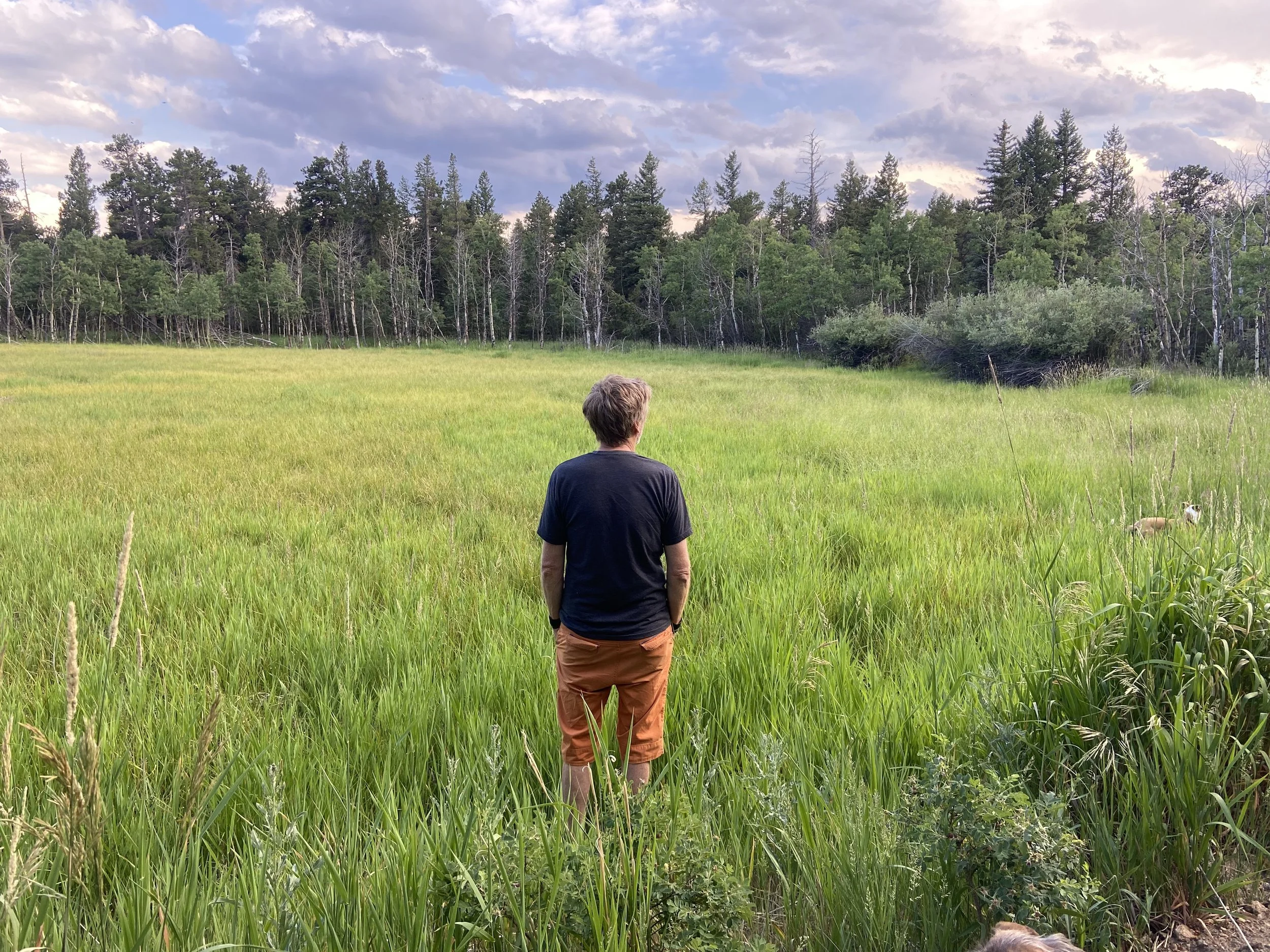
The questions driving my work are: How does the majority culture imprint itself on land, and what does that imprint cost, ecologically, socially, spiritually? What is lost when wildness is managed into compliance? What does land remember that humans have forgotten? These questions are informed by thirty five years of living and working in the western U.S. and Trinidad and Tobago in the southern Caribbean, and by growing up in the Caribbean, Mediterranean, Middle Eastern, and European regions. There and here, the traces of occupation, displacement, and cultural layering are written visibly into landscape. Reflecting this, my series Controlled Wild examines fortress conservation and the tension between ecological restoration and human control, using Rocky Mountain Arsenal National Wildlife Refuge, a former federal Superfund site turned bison sanctuary as its anchor. Interrupted Landscape uses barbed wire as both subject and material, engaging the estimated 620,000 miles of barbed wire in the American West that fragment movement for wildlife and humans alike. One of my newest series, Earthbound (2023), turns toward mortality and painting figures at rest in the land as a counterpoint to sky-bound narratives in western culture.
My work operates at the intersection of land art, ecological inquiry, and social history. It enters public life through exhibitions and large-scale projection onto public buildings. I have shown in community galleries, co-curated public art events, and facilitated studio visits and conversations that bring people into direct contact with the ideas and processes behind the work. Disciplinarily, my practice sits between painting’s long tradition of landscape representation and the more research-driven approaches associated with land art and socially engaged practice, without fully belonging to either.